

Pricing is not just math.
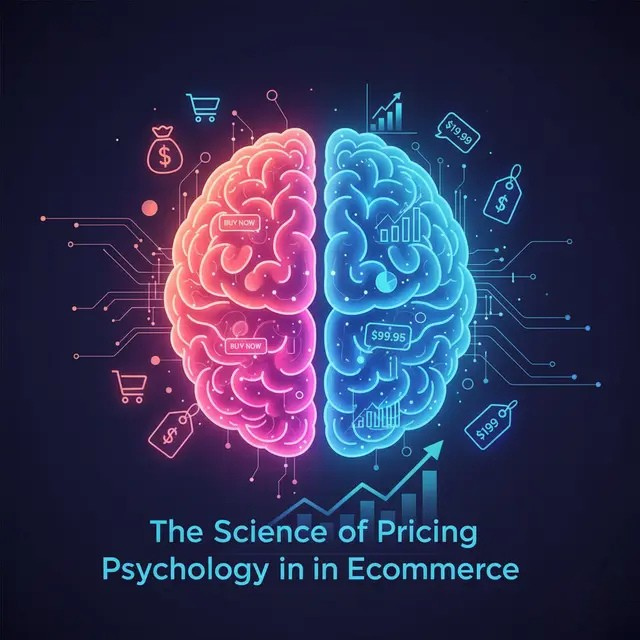
Shoppers make price decisions through emotion first and logic second.
That means the way a price is presented can matter just as much as the number itself.
Humans do not calculate price in a vacuum. They compare, anchor, feel, and react.
Why pricing psychology matters
When a shopper sees a price, they are not only asking whether they can afford it.
They are also asking:
- Is this worth it?
- Does this feel safe?
- Am I getting a deal?
- Will I regret this later?
Those questions happen fast, which is why psychological pricing can change conversion so dramatically.
How the brain sees price
The brain does not process prices like a spreadsheet.
It uses shortcuts.
One of the most important shortcuts is the left-digit effect.
That is why $19.99 often feels meaningfully cheaper than $20.00, even though the difference is tiny.
The first digit anchors perception.
Three psychological pricing triggers that work
1. Charm pricing
Prices ending in .99 or .95 often feel more approachable.
They signal value and reduce resistance.
2. Anchoring
A higher-priced option makes the target price look more reasonable.
For example, showing a premium tier first can make the middle tier feel like the safest choice.
3. Contrast effect
A $99 product feels cheaper when placed next to a $199 product.
The surrounding context changes how the same number is perceived.
How psychological pricing improves Shopify results
Psychology-backed pricing can improve:
- Conversion rate
- Average order value
- Profit per visitor
- Perceived brand value
It works because it helps shoppers feel more confident about the purchase.
Simple examples to test
Use A/B/n testing to compare prices such as:
| Variation | Example |
|---|---|
| Round price | $20.00 |
| Charm price | $19.99 |
| Premium anchor | $24.00 |
| Value-focused offer | $22.95 |
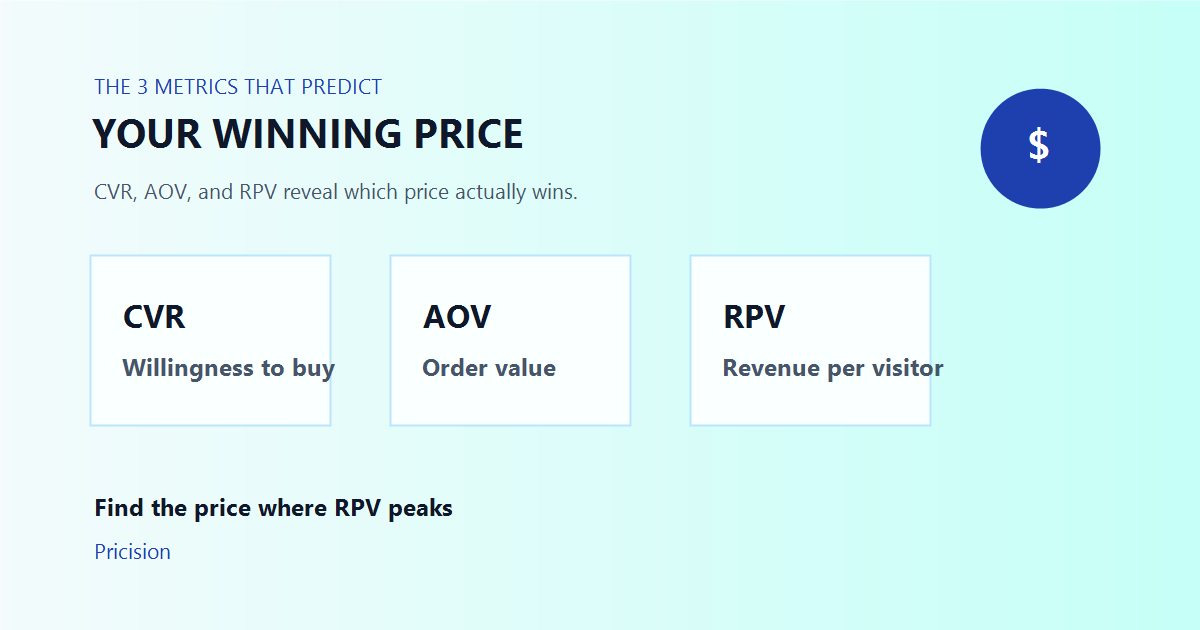
The winner is not always the cheapest option.
It is the option that customers perceive as the best value.
What to measure
Do not judge pricing psychology only by click-through or revenue.
Track:
- Conversion rate
- Average order value
- Revenue per visitor
- Profit per visitor
Those metrics tell you whether the psychological framing is actually improving the business.
Common mistakes
Psychology works best when it supports the offer.
It fails when stores:
- Use tricks that feel fake
- Change too many variables at once
- Ignore actual margin impact
- Copy competitors without testing
- Assume every product needs the same price pattern
The goal is not manipulation.
The goal is clarity, trust, and better decisions.
Final takeaway
Pricing psychology gives ecommerce brands a practical edge.
When you understand how customers perceive price, you can test smarter, reduce friction, and improve profit without guesswork.
Pricision
Stop guessing your next price
Use real customer behavior to discover the price that generates the strongest result for your Shopify store.
Start your free trial