


Sales season can be dangerous for margin.
When traffic spikes, it becomes tempting to win with deeper and deeper discounts.
That often works for orders in the short term, but it can quietly train customers to expect lower prices and lower your long-term profitability.
The goal is not to sell more at any cost. The goal is to sell more while keeping enough margin to grow.
The hidden cost of over-discounting
Every extra percentage point of discount reduces the money left after ad spend, product cost, and fulfillment.
That means a strong sales season can still produce weak profit if pricing is not controlled.
Common symptoms include:
- Higher revenue but weaker gross profit
- More customer wait-and-buy behavior
- Lower confidence in your regular price
- Reduced ability to scale ads profitably
If shoppers learn that every sale is bigger than the last, your full-price offer becomes harder to defend.
Why price testing protects margin
Price testing helps you find the highest price customers will still accept before you launch a major campaign.
Instead of guessing a discount level, you measure how different prices affect:
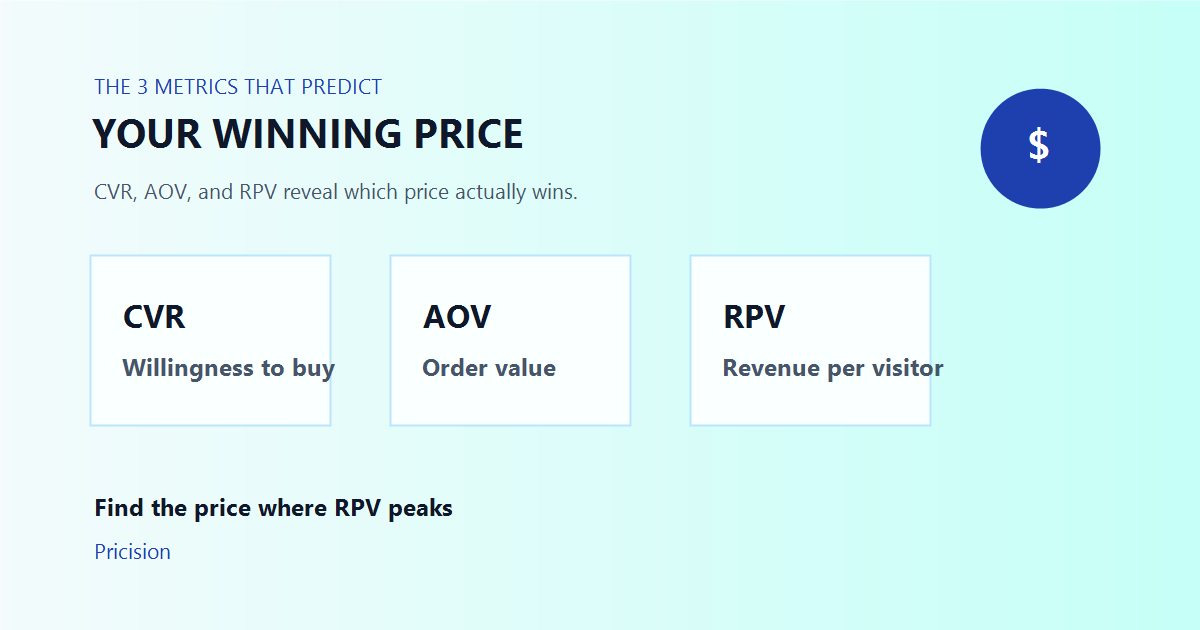
- Conversion rate
- Average order value
- Profit per visitor
- Overall margin
That gives you a real ceiling.
Once you know the ceiling, you can discount with control instead of fear.
A profit-first framework
Use this simple process to protect margins during any high-sales period:
1. Define your discount ceiling
Start with the highest discount you are willing to offer without breaking your margin target.
If the ceiling is too low, you may miss the opportunity.
If it is too high, you lose profit too quickly.
2. Frame value before savings
Do not rely on the discount alone.
Strengthen the offer with:
- Product quality
- Limited editions
- Strong bundles
- Trust signals
- Shipping clarity
This helps shoppers justify the purchase without requiring a deeper cut.
3. Use shipping incentives strategically
Sometimes free shipping performs better than a bigger item discount.
A threshold like Free over $59 can raise AOV while protecting margin better than a flat 20% off.
Metrics that matter
Do not judge sales season by revenue alone.
Use this table instead:
| Metric | Why it matters |
|---|---|
| Conversion rate | Shows whether the offer still works |
| Average order value | Shows whether customers add enough to justify the price |
| Profit per visitor | Shows the real commercial result |
| Margin per order | Shows whether the sale is actually healthy |
A promotion is only strong if it improves the business, not just the dashboard.
Example: 15% off vs 25% off
A Shopify accessories brand tested 10%, 15%, and 25% discounts before BFCM.
The 25% offer generated more orders.
But the 15% offer kept nearly the same conversion volume and delivered better profit per order.
That is the kind of result that protects a business during the busiest season of the year.
What to do before the next sale season
Before your next campaign, make sure you have:
- A tested discount ceiling
- A clear margin target
- A plan for shipping incentives
- A way to measure profit per visitor
- A fallback if conversion drops too far
This turns discounting into a controlled strategy instead of a panic move.
Final takeaway
Sales season should not force you into underpricing.
If you test price levels before the campaign, you can keep conversion high, protect margin, and avoid training customers to wait for the next sale.
The best discount is the one that still leaves the business stronger after the sale ends.
Pricision
Stop guessing your next price
Use real customer behavior to discover the price that generates the strongest result for your Shopify store.
Start your free trial