

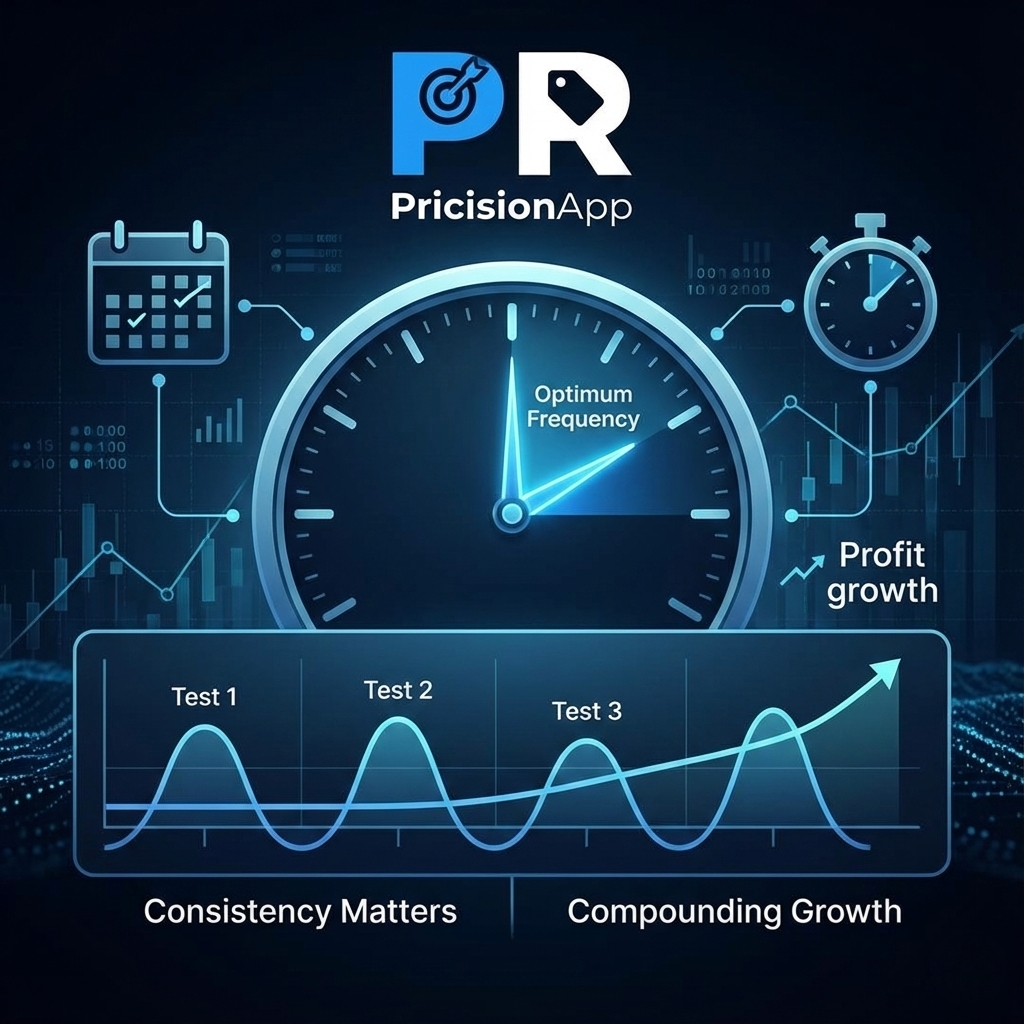
A/B testing works best when it becomes a consistent operating habit, not a one-time campaign.
Many ecommerce teams ask the question the wrong way. They ask whether they should test this week, this month, or this quarter. The better question is whether their store has enough traffic, enough discipline, and a clear enough process to support a reliable testing rhythm.
The goal is not to run as many tests as possible. The goal is to run tests often enough to keep learning, without creating rushed decisions and noisy data.
When testing is too infrequent, pricing, conversion, and merchandising decisions start to drift back toward guesswork. When testing is too aggressive, teams stop waiting for enough data and begin acting on false winners.
Why testing frequency matters
Testing cadence shapes the quality of your decisions.
If you run experiments only occasionally, you create long gaps between insights. That usually leads to:
- Slower learning cycles
- More reliance on opinion
- Missed pricing or conversion opportunities
- A backlog of unvalidated ideas
If you run tests too quickly or stack too many at once, you create a different problem:
- Incomplete sample sizes
- Conflicting signals
- Operational confusion
- Higher risk of acting on random variance
The strongest ecommerce brands sit in the middle. They test with a repeatable rhythm, keep variables controlled, and move to the next experiment only after the previous one has produced a trustworthy lesson.
How often should you run A/B tests?
The right answer depends mostly on traffic volume and the impact of the variable you want to test.
| Store profile | Suggested cadence | Why it works |
|---|---|---|
| Low-traffic stores | 1 meaningful test every 3-4 weeks | More time is needed to collect enough visits and conversions |
| Mid-traffic stores | 1-2 tests per month | Balances momentum with statistical discipline |
| High-traffic stores | Continuous testing, often weekly | Larger sample sizes make faster decisions possible |
This does not mean every store should follow a calendar blindly.
It means your cadence should match your ability to reach a useful sample size without compromising decision quality.
Use duration as a guardrail, not a rule
Many teams use a 7-14 day window as a default testing cycle.
That is usually a practical starting point because it helps capture:
- Weekday and weekend behavior
- Paid traffic fluctuations
- Typical buying patterns across a full purchase cycle
But a testing window is only helpful when the store generates enough qualified traffic.
A test should end when it has enough clean evidence to support a decision, not simply because the calendar says it is over.
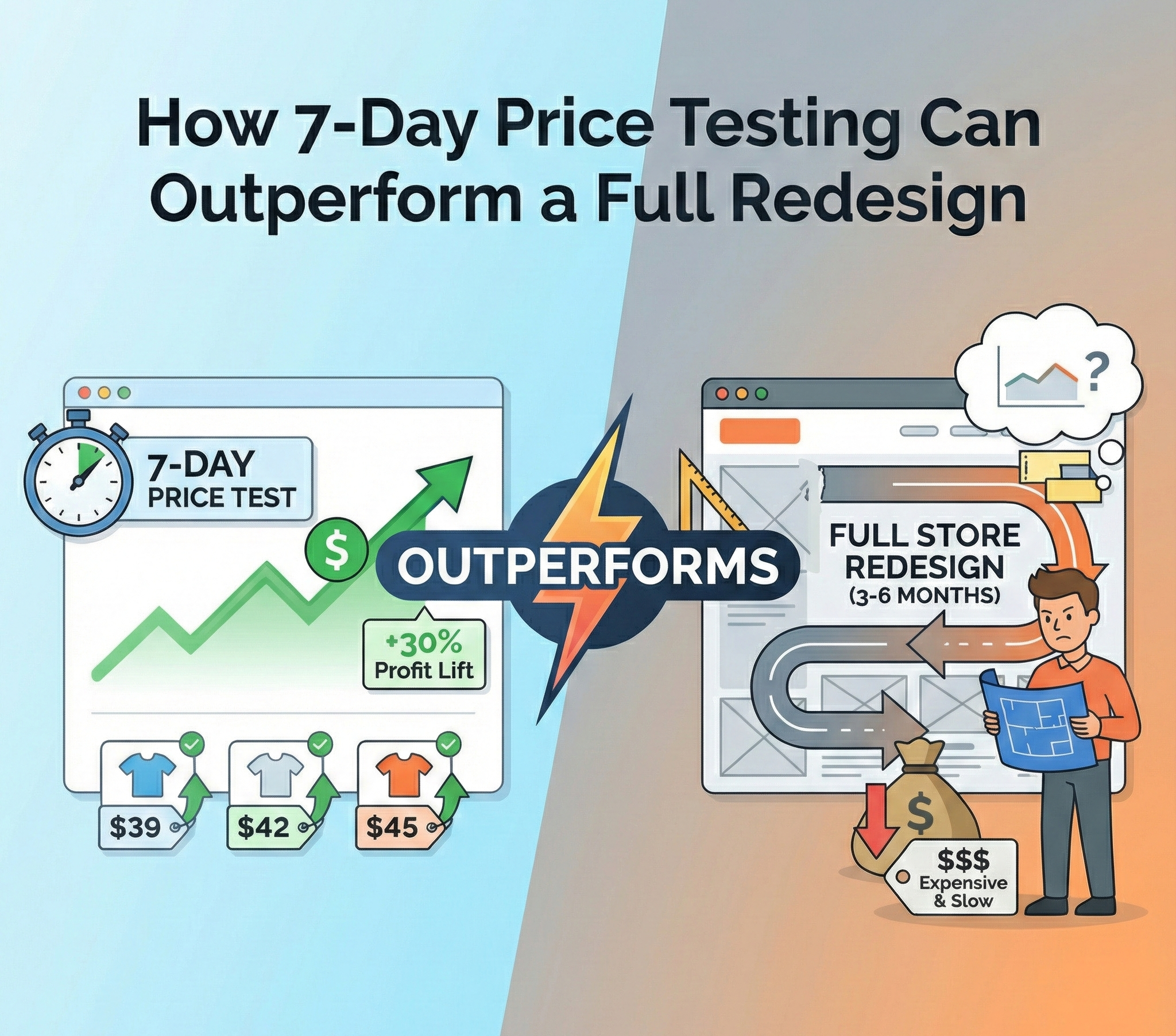
For some products, seven days is enough. For others, even two weeks may still be too short.
A sustainable testing rhythm for ecommerce teams
The most reliable cadence is simple and repeatable:
- Choose one high-impact hypothesis.
- Isolate one meaningful variable.
- Run the test through a full traffic cycle.
- Review conversion, revenue, and profit outcomes.
- Document the learning.
- Roll the winner into your new baseline.
- Launch the next test.
That process creates forward motion without overwhelming the team or corrupting the data.
Good candidates for frequent testing
Some areas deserve more regular experimentation because they directly affect revenue and margin:
- Pricing
- Product page messaging
- Offer framing
- Checkout friction
- Shipping thresholds
- Trust signals near purchase decisions
These variables tend to produce clearer commercial outcomes than low-impact cosmetic changes.
Tests that should happen less often
Some experiments naturally require more patience or more setup:
- Major homepage redesigns
- Broad navigation changes
- Brand repositioning work
- Tests that affect multiple templates at once
These are still worth testing, but they usually should not define the weekly operating cadence of the business.
A simple way to decide whether you are testing too fast or too slow
Use this quick check:
| Signal | What it usually means |
|---|---|
| You rarely have a test live | Your growth engine is underpowered |
| You end tests early to keep momentum | Your cadence is too aggressive |
| Your team cannot explain the last 3 learnings | Insights are not being documented |
| Multiple tests overlap on the same purchase path | You may be creating interpretation problems |
If any of those patterns look familiar, the problem may not be your testing tool. It may be your testing rhythm.
Example: a healthy monthly cadence
Imagine a mid-sized Shopify brand with steady traffic to a best-selling collection.
Instead of launching random experiments whenever someone suggests an idea, the team commits to one structured test every two weeks.
In one quarter, that could look like this:
- Test 1: Price presentation on the product page
- Test 2: Free shipping threshold messaging
- Test 3: Checkout reassurance copy
- Test 4: Bundle offer positioning
None of these tests needs to be dramatic on its own.
What matters is that the business keeps learning, compounds small wins, and avoids long stretches where important commercial assumptions go untested.
Common mistakes when setting testing cadence
The most common problems are operational, not technical.
- Starting a new test before the last one finishes
- Treating every idea as equally urgent
- Measuring success only by conversion rate
- Ignoring profit impact when testing price or offer changes
- Failing to record why a variation won or lost
- Pausing experimentation after one successful result
Consistency beats intensity. A stable testing system usually outperforms occasional bursts of experimentation.
What cadence should most brands start with?
For most ecommerce brands, a practical starting point is:
- Low traffic: one meaningful experiment every 3-4 weeks
- Moderate traffic: one experiment every 2 weeks
- High traffic: continuous testing with clear prioritization
If you are unsure where to begin, start slower, protect data quality, and build a workflow your team can sustain. Once the process is clean, you can increase frequency.
Final takeaway
The best testing cadence is the one your team can run consistently, measure responsibly, and learn from every time.
You do not need dozens of experiments in flight to create growth. You need a reliable system for turning questions into evidence and evidence into better commercial decisions.
Pricision
Stop guessing your next price
Use real customer behavior to discover the price that generates the strongest result for your Shopify store.
Start your free trial